
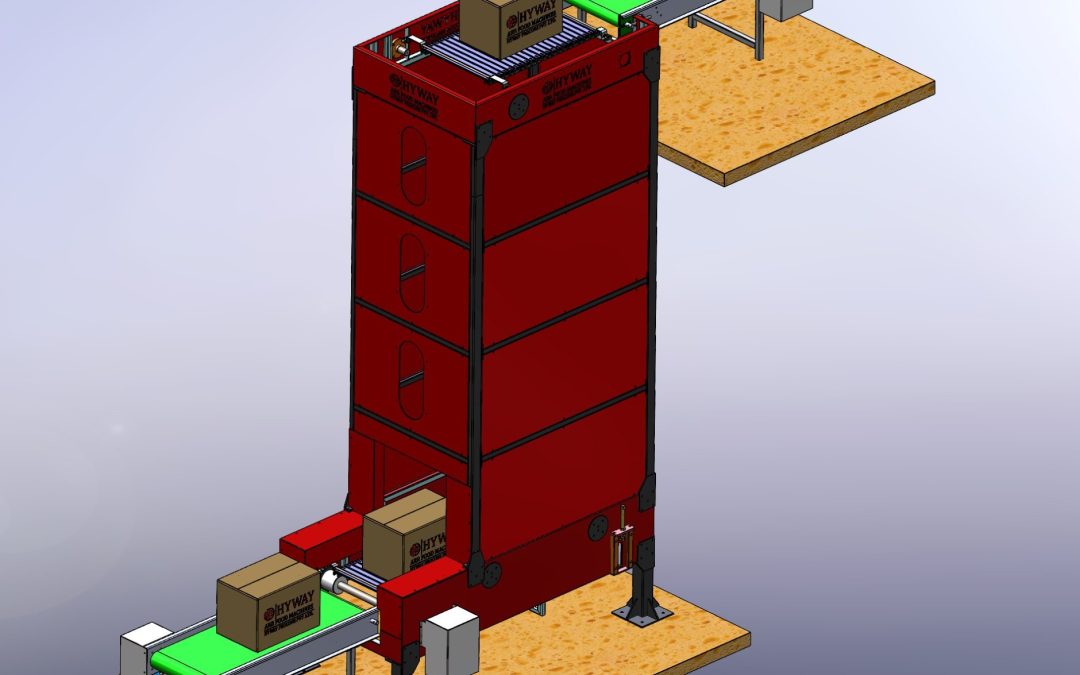
In today’s competitive industrial landscape, businesses are under constant pressure to increase productivity, reduce operational costs, and streamline material handling processes. Whether in warehouses, distribution centers, manufacturing plants, or logistics hubs, the efficient movement of goods plays a critical role in overall operational success. For facilities handling large volumes of products every day, Continuous Vertical Conveyors (CVCs) have become one of the most effective and reliable material handling solutions available.
Unlike traditional lifting systems that move products one load at a time, Continuous Vertical Conveyors are specifically designed to transport materials continuously between multiple floor levels. Their unique design enables products to be loaded and unloaded simultaneously, creating a constant flow of goods and significantly improving throughput. As a result, businesses can achieve faster operations, better space utilization, and greater efficiency.
What Is a Continuous Vertical Conveyor?
A Continuous Vertical Conveyor is an automated material handling system designed to move products vertically between different levels of a facility without interruption. These systems utilize a series of carriers attached to a rotating mechanism that continuously transports items upward and downward.
Because the conveyor operates continuously, multiple products can be transported simultaneously, making it ideal for high-volume operations where speed and efficiency are critical. Continuous Vertical Conveyors can handle a wide range of products, including cartons, totes, boxes, trays, packages, and lightweight pallets.
These systems are commonly used in:
- Warehouses
- Distribution Centers
- Manufacturing Facilities
- E-commerce Fulfillment Centers
- Food Processing Plants
- Packaging Industries
- Retail Distribution Hubs
- Logistics Operations
Why High-Volume Facilities Need Continuous Vertical Conveyors
As businesses grow, so do their material handling requirements. Traditional methods such as forklifts, freight elevators, or manual transportation often struggle to keep up with increasing product volumes.
Continuous Vertical Conveyors address these challenges by providing:
1. Continuous Product Flow
One of the biggest advantages of a Continuous Vertical Conveyor is its ability to maintain uninterrupted material movement. Products can be loaded at one level while other products are simultaneously being unloaded at another level.
This continuous operation eliminates delays and bottlenecks that commonly occur with batch-based lifting systems.
Benefits include:
- Faster order fulfillment
- Improved workflow efficiency
- Reduced waiting times
- Higher operational productivity
For facilities processing thousands of products daily, this continuous movement can significantly improve overall performance.
Increased Throughput and Productivity
High-volume operations require systems capable of handling large quantities of products quickly and efficiently.
Continuous Vertical Conveyors offer exceptional throughput rates compared to conventional lifting methods. Since multiple carriers operate simultaneously, the system can move a substantial number of items per hour.
Advantages include:
- Increased product handling capacity
- Reduced downtime
- Faster movement between floors
- Improved production flow
This makes Continuous Vertical Conveyors particularly valuable in distribution centers and e-commerce facilities where speed is essential.
Optimizing Available Floor Space
Warehouse space is one of the most valuable assets for any business. As storage requirements increase, companies must find ways to maximize available space without expanding their facilities.
Continuous Vertical Conveyors support vertical warehouse design by efficiently connecting multiple floor levels.
Key space-saving benefits include:
- Smaller operational footprint
- Better use of vertical storage areas
- Reduced need for ramps and large lifting equipment
- Improved facility layout flexibility
By utilizing vertical space more effectively, businesses can increase storage capacity while maintaining smooth material flow.
Enhanced Workplace Safety
Material handling activities can pose significant safety risks when performed manually or with traditional equipment.
Continuous Vertical Conveyors improve workplace safety by reducing employee interaction with heavy lifting processes and minimizing the need for forklifts in vertical transportation tasks.
Safety features often include:
- Safety enclosures
- Emergency stop systems
- Automatic sensors
- Overload protection
- Controlled loading and unloading zones
These features help reduce accidents, improve compliance, and create a safer working environment.
Reduced Labor Costs
Labor costs represent a significant portion of operational expenses for warehouses and manufacturing facilities.
Automating vertical transportation with Continuous Vertical Conveyors allows businesses to:
- Reduce manual handling requirements
- Improve workforce efficiency
- Minimize repetitive tasks
- Allocate labor to higher-value activities
As a result, organizations can improve productivity while controlling operational costs.
Supporting Warehouse Automation
Modern warehouses increasingly rely on automation to improve efficiency and remain competitive.
Continuous Vertical Conveyors integrate seamlessly with:
- Conveyor Networks
- Automated Storage Systems
- Sorting Equipment
- Packaging Lines
- Warehouse Management Systems (WMS)
This integration enables smooth product movement throughout the facility while supporting end-to-end automation strategies.
Reliable Performance for Demanding Operations
High-volume facilities require equipment capable of operating consistently under demanding conditions.
Continuous Vertical Conveyors are engineered for durability and long-term reliability. Their robust construction and efficient design help minimize maintenance requirements while delivering dependable performance.
Benefits include:
- Long service life
- Consistent operation
- Reduced downtime
- Lower maintenance costs
- Improved return on investment
These qualities make Continuous Vertical Conveyors an excellent choice for businesses focused on long-term operational efficiency.
Industries Benefiting from Continuous Vertical Conveyors
Many industries rely on Continuous Vertical Conveyors to improve productivity and streamline operations.
Common applications include:
Warehousing and Distribution
Efficient movement of cartons, packages, and inventory between multiple levels.
E-commerce Fulfillment Centers
Fast transportation of products for order picking, packing, and shipping operations.
Manufacturing Facilities
Movement of components, raw materials, and finished products throughout production processes.
Food and Beverage Industry
Safe and efficient handling of packaged food products between production and storage areas.
Packaging Operations
Continuous flow of products through packaging and sorting systems.
Retail Distribution Centers
Efficient inventory movement supporting fast product replenishment and distribution.
Why Choose HYWAY for Continuous Vertical Conveyor Solutions
HYWAY specializes in designing and manufacturing advanced Vertical Conveyor Systems tailored to the unique requirements of modern industries. Our Continuous Vertical Conveyors are engineered to deliver reliable performance, maximize operational efficiency, and support high-volume material handling environments.
With a focus on innovation, quality, and customer satisfaction, HYWAY provides customized solutions that help businesses optimize workflows, reduce costs, and improve productivity.
Conclusion
Continuous Vertical Conveyors have become an essential solution for businesses handling large volumes of products across multiple levels. Their ability to provide uninterrupted material flow, improve throughput, enhance safety, and optimize warehouse space makes them a valuable investment for modern facilities.
As industries continue to embrace automation and seek greater operational efficiency, Continuous Vertical Conveyors will remain a key component of successful material handling strategies. By implementing the right conveyor solution, businesses can improve productivity, reduce costs, and position themselves for sustainable growth in an increasingly competitive marketplace.